Setting a Table for a Long, Unhurried Lunch
Setting a table for a long, unhurried lunch is easier when you protect serving space, keep essentials within comfortable reach, and choose one focal detail.
The most common mistake when setting a table for a long, unhurried lunch is filling every open patch with another dish, glass, or decoration. The cost is practical: serving bowls have nowhere to land, guests reach across one another, and the table feels busy before anyone sits down. Start with the meal’s path from kitchen to table, then arrange the objects around it.
A relaxed lunch does not need elaborate place settings. It needs enough clear space for food to arrive, enough room for people to eat without guarding their elbows, and one detail that gives the table a sense of occasion. When something feels awkward, treat it as a layout problem first. Moving one object is often more useful than adding another.
When the table feels crowded before lunch begins
Clutter usually comes from setting out everything that might be useful rather than what guests will use. A full assortment of cutlery, multiple glasses, bread plates, condiment jars, and decorative pieces can occupy the space needed for shared dishes. Begin with the menu and put out only the utensils and vessels it calls for.
Clear a central serving lane before setting individual places. This can be a strip down the middle of the table or a wider landing area at one end, depending on its shape. Keep it free of flowers, candles, and spare glasses. A host carrying a hot casserole should not have to ask someone to move a centerpiece at the last moment.
Then place the shared dishes that need the most room. If the serving bowl for salad is broad, account for that footprint before adding small objects around it. Leave a little open space beside each serving dish so a guest can set down a spoon or steady a plate.
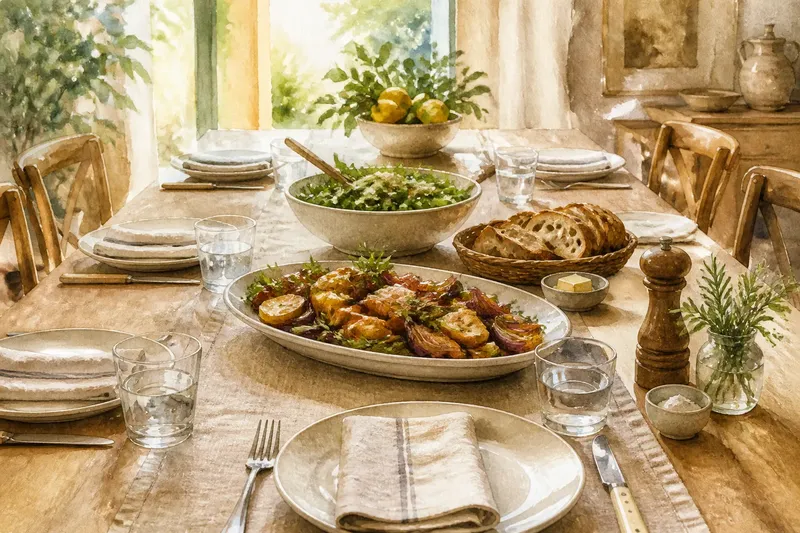
Say you are serving a platter of roasted vegetables, a bowl of greens, and sliced bread. Put the platter and salad bowl along the center lane, with bread at an end where it can be passed in either direction. If a vase leaves no space for the salad tongs, move the vase to a sideboard rather than squeezing the serving pieces together. The expected result is a table where dishes can be set down and passed without rearranging the whole scene.
When guests keep reaching across one another
Repeated reaching is often a sign that a dish is placed for visual balance instead of access. A bowl can look centered yet sit beyond the comfortable reach of half the table. Place shared food where it can be passed along the table, or divide it into smaller serving dishes when that makes passing easier.
Think through the route each dish will take. If guests are likely to pass food clockwise, keep the serving spoons oriented so they can be picked up without turning a bowl around. Put salt, pepper, butter, and other frequently used items where a guest can reach them without leaning over a plate. For a long table, duplicate a small condiment only if people at both ends would otherwise have to ask for it.
Consider who is sitting where. A guest with a serving plate in front of them may need room to pass it onward; someone seated beside a wall or at a corner has fewer directions to move. Avoid placing a large bowl in front of that person if another spot is available. The goal is not a perfectly mirrored arrangement, but a route that works for the people at the table.
For an especially long or narrow table, put the most frequently passed dishes near the middle and less-used items toward the ends. A host can also serve a portion of a dish before bringing it out if passing a heavy vessel would be cumbersome. That is a useful adjustment; arranging a complicated relay of decorative trays is not worth the effort.
When place settings leave too little room to eat
People need space for more than a plate. They need to rest a hand, hold a glass, reach for cutlery, and shift position during a meal. If plates nearly touch or glasses sit beside someone’s wrist, the setting is too tight even if every object technically fits.
Set the dinner plate first, then arrange the cutlery that the menu requires. Keep the drinking glass above and to the right of the plate, where it is less likely to interfere with passing food. A napkin can rest on the plate or beside it; a folded shape that takes up unnecessary room does not improve the meal.
When the table is small, choose a compact place setting rather than trying to create a formal spread. A shared basket can replace individual bread plates if guests can reach it easily. Keep serving utensils with their dishes, not scattered at each place. Remove unused settings before lunch instead of leaving them as decoration.
Check the chairs as well as the tabletop. A chair pulled back should not block the route to the kitchen, and a guest should be able to sit without moving a side table or plant. If the dining area is tight, move extra chairs out of the path and bring them in only if needed.
When the focal detail competes with the food
A centerpiece works best when it gives the table a point of attention without interrupting conversation or service. Tall arrangements can block sightlines. Wide arrangements can occupy the same space as serving bowls. Scented flowers may compete with the smell of the meal.
Choose one focal detail and give it a clear place. It might be a low bowl of citrus, a small bunch of herbs in a simple vessel, or a linen runner that adds color without covering the serving lane. Keep the detail low enough that guests can see one another across the table. If it needs to be moved for the food, it is probably too large for that position.
Let the rest of the table stay quiet. A focal detail does not need matching napkin rings, coordinated candles, and a collection of small ornaments to feel deliberate. Use the color or texture already present in the plates and linens, then stop when the detail has a place and the table remains easy to use.
When the meal arrives and there is nowhere to put it
This problem often appears because the table was arranged without considering the trip from kitchen to dining area. A host may have to carry a hot dish, open a door, and move a centerpiece at once. Before guests arrive, decide where each course will land and keep that spot open.
Use a sideboard, kitchen counter, or sturdy serving cart as a staging place for dishes that do not need to be on the table immediately. Keep a trivet or heat-safe mat ready for hot cookware. Put serving spoons near the dishes they belong to, and clear a route between the kitchen and the table.
For a meal with several courses, bring out only what is needed at that moment. Clear plates before the next course arrives, but do not turn every pause into a rapid reset. A calm table can hold a little evidence of the meal: a bread board, a serving spoon, or a half-empty carafe. The useful distinction is between objects that support the next course and those that obstruct it.
What should you adjust before guests sit down?
Where should the serving dishes go?
Set the largest shared dishes in the clear serving lane, with enough room around them for serving utensils and hands. Put less-used items at the ends or on a nearby side surface.
How do you make a narrow table comfortable?
Use only the plates, glasses, and cutlery the menu needs, and keep the center free for food. If a shared dish is too wide for the table, serve it from a sideboard rather than wedging it between place settings.
What makes a centerpiece practical?
Choose one low, compact object that does not block faces or compete with serving space. Move it off the table if it makes passing food awkward.
Should every place setting match?
No. The useful test is whether each guest has the appropriate plate, drinking glass, and utensils, not whether every object comes from one set. Keep any variation simple enough that the table still feels coherent.
How can you make one last layout check?
Before lunch, sit briefly in each seat that may be used. Notice whether a glass is difficult to reach, a chair catches on a wall, or a centerpiece blocks the person across from you. Then make the smallest correction that solves the problem.
- Can shared dishes land without covering a place setting?
- Can each guest reach the items they are likely to need?
- Is there a clear path for carrying food from the kitchen?
- Can people see one another across the table?
- Is any object present only because there was an empty spot?
Setting a table for a long, unhurried lunch is less about adding ceremony than removing small interruptions. Preserve a landing place for food, make passing predictable, and let one considered detail mark the occasion. Once the route from kitchen to table and the reach from each seat feel clear, leave the arrangement alone and enjoy the meal.