The Matching Kitchen Myth: Why Every Object Need Not Belong to a Set
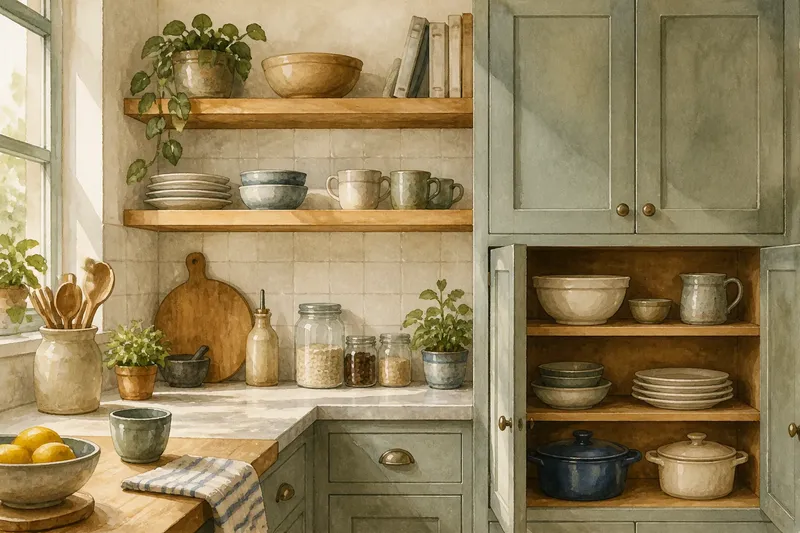
The matching kitchen myth makes a room feel rigid. Build visual coherence with scale, material, and color while choosing useful pieces you want to keep.
The matching kitchen myth is easy to believe when a cabinet door opens onto a jumble of cups, bowls, and serving dishes. Buying a complete set seems like the quickest fix, but it can leave you with duplicates you do not use and a kitchen that feels more like a display than a working room. Visual coherence does not require every object to match. It comes from relationships: similar scale, repeated materials, and colors that have room to vary.
Start with a kitchen that already feels crowded
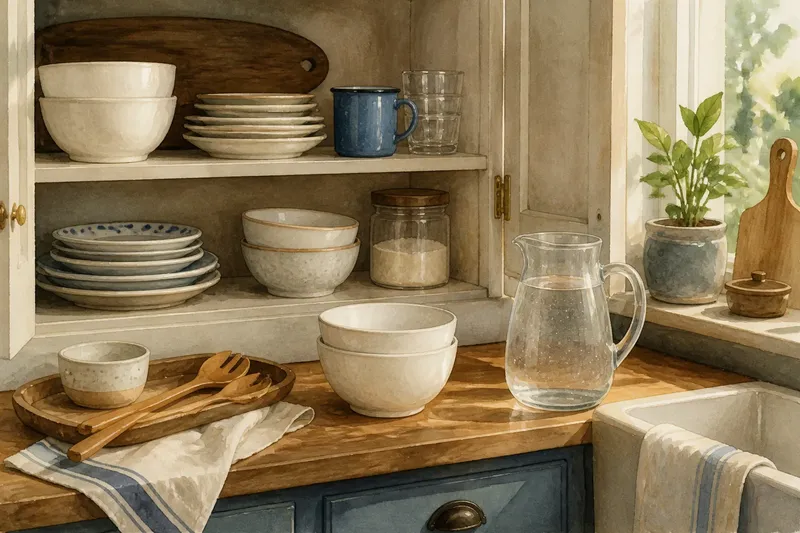
Say you are fitting out a small rental kitchen with a narrow cupboard, a wooden worktop, and a few things already in daily use. You have two sturdy white bowls, a stack of mismatched side plates, a blue enamel mug, and a clear glass jug. A matching dinnerware set looks tempting because its pieces appear to solve the visual problem all at once.
But the problem is not that the dishes come from different sets. It is that the cupboard has no clear pattern. The bowls are hidden behind taller plates, the mug has nowhere to sit, and the jug is treated as if it were just another drinking vessel. Replacing everything would spend money and cupboard space without addressing those relationships.
For this invented situation, the first move is to take the dishes out and sort them by what they do: everyday eating, serving, drinking, and occasional use. Keep the pieces that are comfortable to hold, easy to wash, and the right size for the cupboard. Set aside an item that has no useful role, even if it technically belongs to a set. The expected observable result is a smaller group of objects with a clearer purpose, not a perfectly uniform display.
Give unlike objects a shared scale
Scale is a quiet way to create order. A low stack of side plates can sit beside a similar-height stack of bowls. A very large serving platter may look stranded among small dishes, while a modest platter can join them even if its pattern is different.
Compare the height and footprint of objects that share a shelf, counter, or table. A narrow row of tall glasses can balance a squat stack of bowls. Repeating one size is often enough; the shapes and decoration can differ. In a crowded cupboard, scale also has a practical consequence: similarly sized pieces stack or line up without making the arrangement awkward to reach.
Do not force every object into a visual group. The glass jug can stand apart if it has a job of its own, such as holding water during meals. A deliberate exception looks more settled than several unrelated pieces competing for attention.
Repeat materials without making a theme
Materials provide another link. Wood, clear glass, glazed ceramic, and enamel each have a distinct surface. When one material appears in more than one place, the room gains a thread without requiring identical objects.
In the imagined rental kitchen, the wooden worktop could connect to a small wooden tray or a pair of salad servers already in use. Clear glass in the jug might echo a glass storage jar. These are not matching sets; they are repetitions a person can notice while moving through the room.
Keep the contrast useful. A wood utensil can soften a row of ceramic dishes, while glass can leave a crowded shelf visually open. There is no need to buy a second object just to create a material echo. If the kitchen already has a useful connection, let it count.
Let color repeat, then leave space for difference
Color can tie objects together, but a single exact shade is not required. A blue mug can relate to a small blue detail on a plate, a painted cabinet, or a cloth nearby. The connection may be subtle; it should not turn every surface into a color-matching exercise.
Use a simple decision: identify one color that already belongs in the room, then notice which objects share it or sit comfortably beside it. White and clear glass can act as quiet intervals between brighter pieces. A warm wood tone can also soften a mix of cool colors.
In the invented kitchen, the blue enamel mug becomes a small accent rather than a problem to solve. The side plates can remain varied if their shapes and scale sit comfortably together. The expected result is a group that feels related without making the mug’s color a demand for a full blue collection.
Arrange by use before arranging for appearance
Once the pieces have a few visual connections, place them where the household will actually reach for them. Everyday bowls belong near the work surface or eating area, not at the back of a high shelf. Serving dishes can occupy less convenient storage if they are used less often. Keep the jug where it can be filled and carried without moving a stack of plates.
This is where a mixed collection can outperform a set. A complete set may include pieces that do not suit the household’s meals or storage. Separate purchases let the collection reflect real habits: cereal bowls, small plates for snacks, and one serving dish that can go from counter to table.
For the hypothetical kitchen, the two white bowls go at the front of the cupboard, the side plates stack together by size, and the jug sits on the counter where it can be filled. The blue mug stays near the cups rather than being displayed alone. The expected observable result is that each object has a clear place and can be reached without rearranging the others.
What should match, and what can differ?
Do all kitchen plates need to match?
No. Plates can differ in pattern or color and still work together if their sizes and shapes make sense as a group. If they stack safely and serve the meals you make, visual uniformity is optional.
How many colors should a mixed kitchen use?
There is no fixed number to follow. Start with colors already present in the room, then add an object only if it feels at ease beside them. A quiet base with a few distinct accents is often easier to live with than trying to coordinate every utensil and dish.
Can mixed kitchenware look intentional on open shelves?
Yes, if the arrangement has a visible rhythm, such as repeated heights, a shared material, or clear groupings by use. Leave some breathing room so that each group reads as a choice rather than a row of objects packed wherever they fit.
When is buying a set the better choice?
A set can suit someone who needs several coordinated pieces at once and has room for the items included. Check that the useful pieces are sold together and that the full collection fits your storage and daily routine, rather than choosing it only because everything looks alike.
Know when the set is worth buying
Matching pieces are not a mistake. They are one option, especially when a household is replacing damaged basics or wants a simple, consistent group. The mistake is treating a set as the only way to make a kitchen look composed. Buy a set because its pieces serve a real need, not because a mixed cupboard has made you assume every object is wrong.
Not worth the effort: buying small decorative accessories just to repeat a color, or replacing useful dishes because their patterns differ. Those choices add objects without improving how the kitchen works. Try moving the pieces you already own into groups by use and scale first.
In the imagined rental kitchen, that small rearrangement leaves the bowls, plates, mug, and jug in place, but makes their relationships easier to see. The matching kitchen myth loses its hold when each object earns its spot and a few shared qualities connect the whole. If you are choosing kitchenware now, start with the items you reach for and let scale, material, and color guide what joins them.